
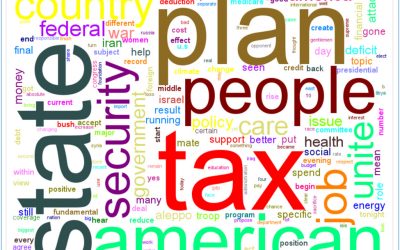
Word Frequencies and Word Clouds
For many qualitative researchers, looking at the specific word choices used by your research participants offers an important first step in exploring your data. … In Transana, the Word Frequency Report allows the researcher to take text or transcribed data, and easily generate a list of words used in your Documents, Transcripts, Quotes, or Clips, along with the number of times each word is used.

Supplemental uses of video research data and truly informed consent
“The qualities that make video data so significant as data also make it very compelling to share with others when presenting our research. … Research participants cannot give truly informed consent regarding the use of video of discussions and events that have not yet happened, and that they might not be able to fully anticipate or predict.” In this article, I discuss the dual-stage consent process.

Choosing between Transana Basic and Transana Professional
Recently, some asked me “In an upcoming project I will analyze a huge amount of (approximately 500 clips) of youtube videos and was wondering, which version of Transana I need – also taking into consideration that I barely have funding for technical devices (e.g. software…) at the moment.” Here’s my response.
Does Using Software Cause Shallow Analysis?
I found this question on an academic web site, ” I wondered if you have used a software in the past that you can recommend in terms of usability, comprehensibility of the analysis, visualization and costs?” When read an early response, I felt compelled to respond.
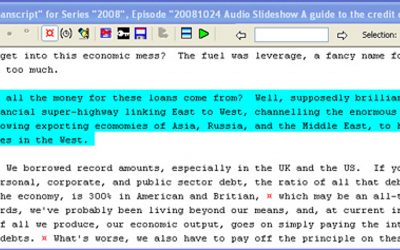
Are Transcripts required in Transana?
In a recent support inquiry, a researcher asked, “I want to know if I can code the videos directly or if Transana requires a transcript to do the coding.”
What is the best way to open code in Transana?
In a recent support inquiry, a researcher asked, “what is the best way to open code a transcribed & segmented video? If I create collections or quick clips, they multiply to an unmanageable number and are not organized in a way where I can see how the odes are overlapping, interacting, etc.”
How does qualitative software influence analysis?
I found myself wondering — how does Transana, with its affordances and tools and ways of working, influence researchers’ approach to their data?

The more they change, the more they stay the same
Yesterday was a big deal. Everything changed for me. But hopefully, nothing will have changed for Transana users.